logo1
Sensit Wind Eroding Mass Sensor    
logo2
Erosion monitoring solutions    
logo3
Home
Model H11-LIN Sensor
Technical
Reference
Ordering
Contact Sensit
Search

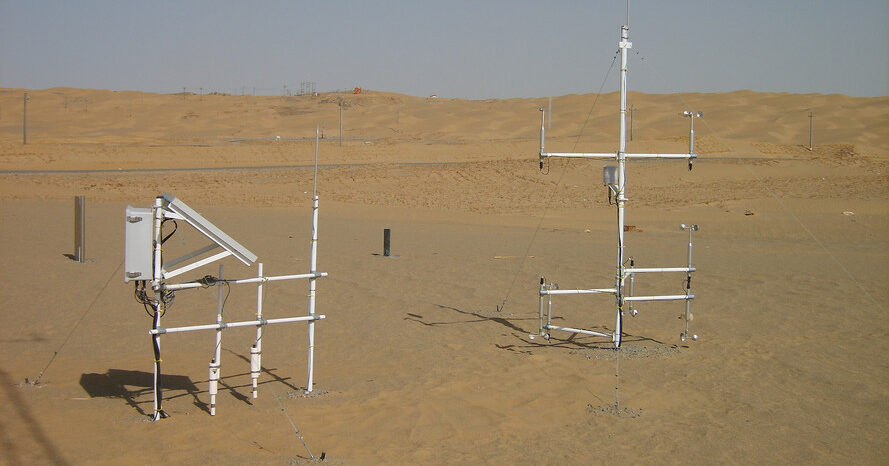
Sensit site - Jornada Range,  LasCruces, NM


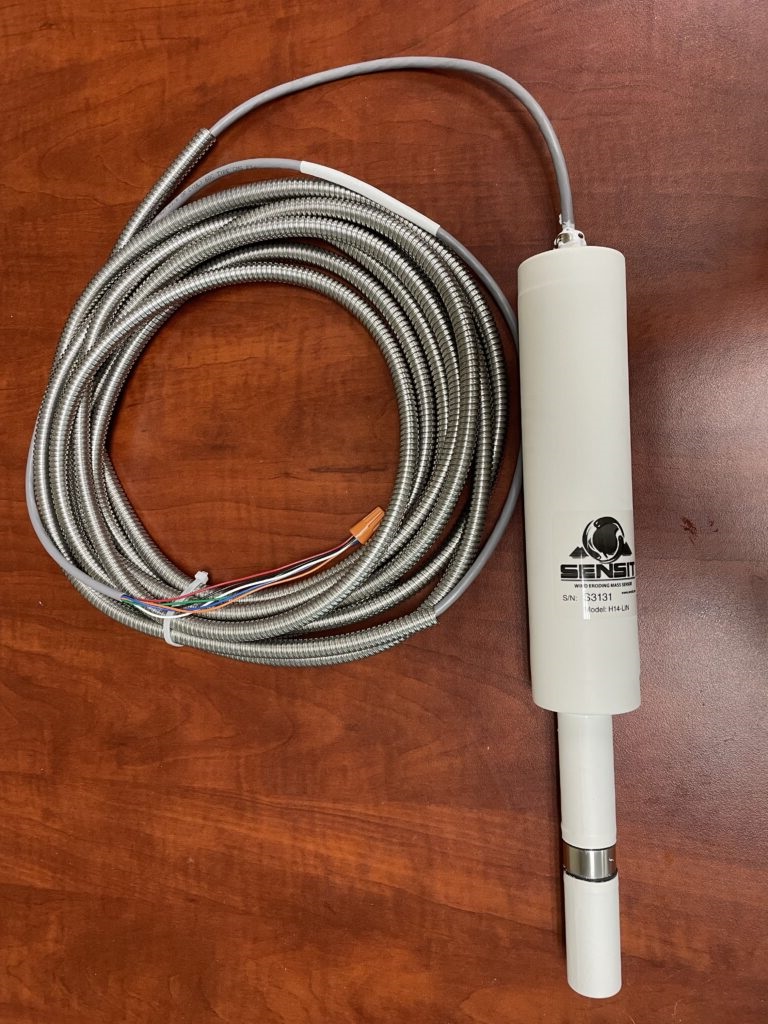
Sensit has produced the Sensit Eroding Mass Flux Field Sensor since 1981, commonly referred to as simply the "Sensit". The Sensit(tm) is the first saltation sensor commercially produced.

Durable, rugged, reliable, and accurate... the best!

Three data outputs:

 PC (particle count)

KE (kinetic energy)

PHA (pulse height analysis per ever particle)


Sensit Home 

Last update March 16, 2008: Model H11-LIN Radial symmetry calibration now available with new sensor orders.

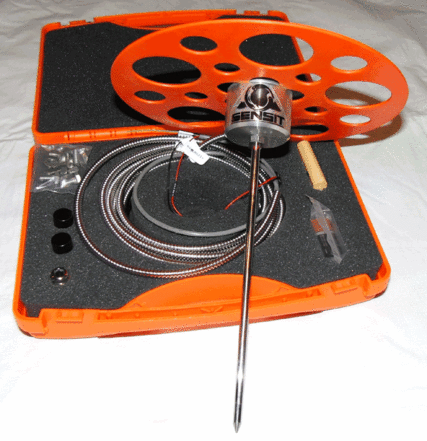
The new radial response calibrator shown below uses a standard sensor piezoelectric crystal as a kinetic energy source providing matched mechanical coupling characteristics. A stepper motor provides pinpoint positioning for data down to one degree increments perpendicular to the crystal surface.

Data below is averaged to emulate the natural averaging of particles impacting the sector facing the wind. The wide natural angle of exposure in the wind helps smooth the otherwise rather rough characteristic response.


Above is an actual (10 degree) radial symmetry calibration showing an example of a typical response pattern for the new Model H11-LIN sensor.  This test requires the PHA output standard on the new Model H11-LIN sensor and can not easily be performed on earlier models. 

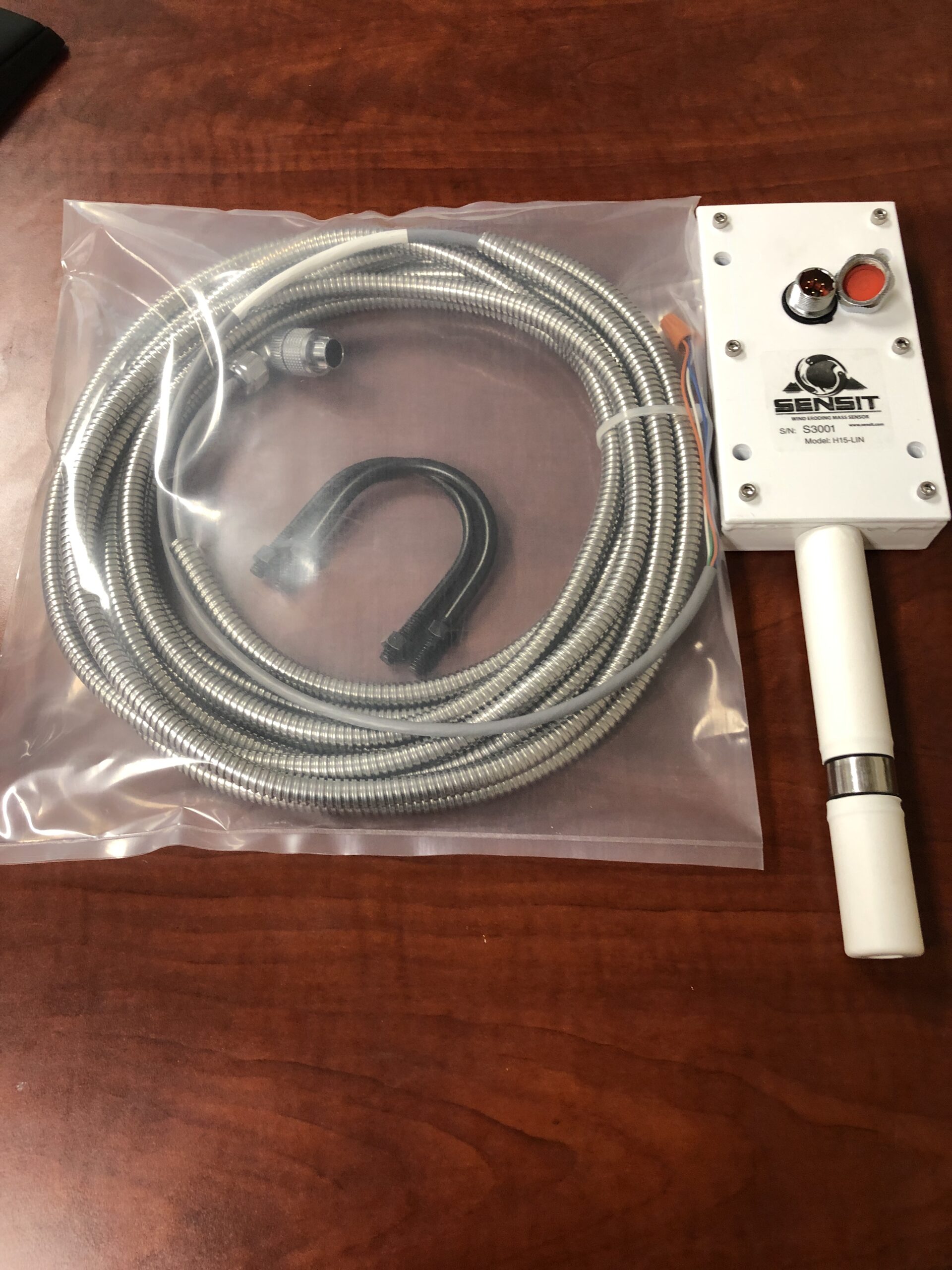
THE NEW SENSOR:  Model H11-LIN


Sensit has replaced the long standard model H11B & C with an enhanced version of the saltation sensor. The new model provides the standard data outputs of KE (kinetic energy) and PC (particle counts) compatible with the original Sensit(tm) model H11B sensor.  The new H11-LIN model now includes a detailed energy per impact output (PHA data) providing the energy spectrum as a result of every individual particle impact. Note: A pulse height analyzer (PHA) is required. Sensit is working a a PHA module to acquire this large amount of data.  Target date: 4th quarter 2008.

Technical information document: click (New Wiring Diagram - March 16, 2008)

Wiring Color Code
New Model Number  -
H11-LIN

Outputs

bullet(brown) KE (pseudo mass flux) - pulse
bullet(white)  PC (particle counts) - pulse

Pulse Energy Outputs (NEW)

bullet(blue) PHA (energy) - variable pulse height
bullet(green)   GAIN - 1X, 10X.

Power

bullet(red) Power + 12VDC @ 70ma
bullet(black) Ground
 

Wind Eroding Mass Sensor

NEW: The PHA (pulse height analysis) data output is a square wave pulse (width: 48uS) whose height varies with the impact energy transferred (total transferred per impact, not just peak) of each particle impact.  This data provides particle energy spectrum.   A pulse height analyzer / data acquisition module is expected to be available 4th quarter 2008.

This new "per particle" energy data will be acquired by the pulse height analyzer module. Data from this module can be read into any computer via RS-232.  PHA data is structured as an XY array where the X-axis represents energy and the Y-axis represents the number of impacts at that energy. The future Sensit PHA module is expected to acquire up to 1000 complete spectrum throughout an erosion event for size separation analysis etc.

Model H12-LIN improvements:

bulletNew data output: The model H11-LIN has an additional output providing the kinetic energy of every individual particle impact. This data is in the form of a variable pulse height signal. A pulse height analyzer (PHA) module to capture this data should be available by the 4th quarter 2007.
bulletProgrammable Gain: Sensitivity can be increased by 10X externally via data logger or by physically connecting a wire to +12V.
bulletSuperior seal: The crystal mounts now extend over the ends of the crystals providing a superior seal and protecting the edges.
bulletLower power: The new sensor draws 70ma versus the previous 90ma current requirement.
bulletAsymmetrical response: Uniform radial response has now been achieved by nickel plating the crystal surface.
bulletNo multiple counts: Large energy impacts do NOT produce erroneous multiple counts.


New Model H11-LIN


Model H11B (No longer available)


Standard Model Number  - H11B or C

Replaced by Model H11-LIN

(No longer available)

Outputs

bullet(brown) KE (mass) - pulse
bullet(white)  PC (particle counts) - pulse

Alternate outputs (seldom used)

bullet(green) KE (mass) - variable pulse width
bullet(blue)   PC (particle counts) -variable pulse width

Power

bullet(red) Power + 12VDC @ 90ma
bullet(black) Ground


Antarctic - Greenland - Chile - Italy - New Zealand - Finland - Korea - Spain - England - Saudi Arabia - India - Germany - Canada - Israel -Mongolia - Columbia - Japan - Indonesia - China - USA - Argentina - Syria - Australia - Mexico - Egypt - Israel - France - Newfoundland - Taiwan - Kuwait - and the United States